
 02 May 2018
BY: michael
Blog / Uncategorized
Comments: 1 Comment
The Question Nobody is Asking: Why Are America’s Youth So Preoccupied With Getting High?
In my busy Dublin counseling practice, seeing clients with addiction problems is about as common as a family doctor seeing a client with a cold. By far and away, substance abuse problems are the most common reasons parents/families will bring a young client into my practice. When asked what the next step is, I often assess whether or not the client’s problems are severe enough to warrant residential treatment or whether they are able to stay clean with outpatient treatment.
As a clinician, it is my job to determine what is the best course of action for a client. To determine that, I have to understand why a particular client has a problem to begin with. This is vitally important because how can you possible decide what interventions will work if you have no idea why they have the problem to begin with? I am trained to ask these questions and naturally my mind is always working on coming up with new questions so I can attempt to answer them.
While it is important to us to ask why substance abuse is an issue with a particular client, I do not see anybody outside of the field of psychology asking these questions. In the news, we read all the time about huge drug busts and the raging cartel wars in Mexico. Much of the national press focuses all of their attention on the drug war and how to prevent drugs from coming in to this country. Even with the legalization debate, much of the focus is on how to keep these drugs out of the hands of children.
But what I am not seeing is anybody asking why do we have an entire generation of American youths who are preoccupied with getting high all the time? This question goes beyond an individual case exploration of why one particular client is having substance abuse problems. I am asking the question of what is wrong with our country, society, culture, etc. that would lead so many youths to want to feel high all of the time?
When I was in high school 16 years ago, plenty of people drank but only a small percentage of students smoked marijuana or used any other drugs. In fact it was a total surprise in college when you heard about people experimenting with harder drugs such as ecstasy and cocaine. Nowadays, I have several clients who started drinking for the first time in middle school and began using hard drugs such as heroine, cocaine, and ecstasy by their Sophomore year in High School. It is easy to assume that many of these kids are bad kids who do not care about school, but the truth of the matter is that we have more and more parents of honor students who are bringing their kids in for substance abuse treatment.
When asked why they would risk everything that they worked for, they simply reply that everybody is doing it and its is easier to find drugs than get alcohol. What’s even more amazing, is that many of our clients will actually be angry at their parents for not letting them smoke pot and will try to convince them why its okay (i.e. research studies, other parents letting friends do it, etc.).
When confronted with severe consequences such as rehab, loss of college money, military school, etc., many of these students will still try to find ways around the rules and will continue using. They will try to beat the drug tests or will switch over to synthetics such as K2 which do not show up as marijuana. We are always amazed at the extent that our clients will take risks to continue using. When asked what makes them take the risks, they simply reply that they just really love the feeling of being high and would rather risk losing college money than quit using.
While it shouldn’t come as a shock because we work with it so often, I am still amazed at how entrenched some clients are in their substance abuse habits. The scary thing is that this problem is growing every year and children whom you would never think would abuse drugs are turning to it.
So why is this happening? Where have we gone so wrong as a country that we have an entire generation of kids who want to not feel anything or just want to feel good at any costs? I think we have to take a hard look at ourselves and realize that perhaps we are to blame for this problem.
In the 1980’s, we were so preoccupied with self-esteem that we created a movement in our homes and schools that attempted to make children feel good about themselves. There is nothing wrong with making a child feel good about themselves but let’s face it, we cannot feel good all of the time. If we make a mistake, we need to know that we made a mistake. If we did poorly on something, we need to know that we did poorly on it. The self-esteem movement had good intentions but the problem with it is that we raised an entire generation of kids who had no idea of how to handle criticism or negative emotions. Anytime a child messed up, we moved quickly to prevent them from feeling bad about it and raised their self-esteem.
As a result, kids got no experience in learning how to sit with negative emotions such as disappointment, shame, guilt, anger, frustration, etc. I believe this is a huge contributor to the substance abuse problem among today’s youth. They have been raised with no ego strength to deal with negative emotions so they look for the easy way out and use substances as a way to numb out the negative emotions or experiences of life. Furthermore, we trained kids that we should always work to feel good about themselves so should we be surprised that they found that substances make them feel good all the time without really having to put forth any effort? How easy it is to drop a pill and feel amazing or to take a hit off a joint and feel good?
In addition to the self-esteem movement, I think we need to blame ourselves for letting television and music for raising our children. We have become such a consumer society that television and music has become a marketing device without anyone knowing about it. Television is so focus on sex, drugs, alcohol, and material goods that television shows have literally glorified getting high, drunk, and acting recklessly. I know Jersey Shore has a loyal fan following but how surprised can we be when children watch a show glorifying drug and alcohol use to an hedonistic extent and then we see kids doing the same thing in their lives. It has become cool to be rich and drunk ergo becoming the new American dream. Kids do not want to work hard anymore to be successful, they want the new American dream which is to be rich and famous and do as little as possible.
These are the real reasons why I think America has such a huge drug problem. We want to spend so time talking about the drug war and spending billions of more dollars on preventing drugs from hitting the streets when the real problem is with the demand for the drugs in the first place. The real question is where do we head next to help fix this problem? What changes do we need to make in our individual lives, homes, counseling practices, etc., to address these issues or even to engage in a discussion of these issues?
 19 Mar 2018
BY: michael
Blog
Comments: No Comments
Fly The Friendly Skies
Fly the Friendly Skies?
When you look at the recent run of high profile airline incidents, it is easy for us to get lost in the drama of the drama of the he said she said and forget to ask ourselves why these incidents are happening all of a sudden and even better yet…what can be done about it? Our clients have been increasingly discussing how the polarization of the country has spilled over into the workplace and creating conflicts where once there were none. One client even went so far to send an email to their employees to remind them to not bring politics into the work place.
So one has to wonder if the conflict that we are seeing in our homes and work places is also spilling over into the airplane? It really is not hard to connect the dots between the two. People are more vocal and assertive than ever before…verbalizing how tired with everything they are and drawing lines in the sand. So how does that play into all of the recent conflict that we have seen on airplanes?
Well…people are angry at the airlines for price gouging and charging for everything while getting less seat room than every before. People are taking this out on airline staff and all courtesy has completely gone out the window. In addition to that, you have airline staff who has been taking the brunt of passenger abuse and they are getting sick of the disrespect and exercising their authority more than ever.
So you put people who are already angry at each other in a tight quarters, more vocal and assertive than ever before, and that is a recipe for what we are seeing on the airplanes. Take Dr. Dao who was the first news story to hit this news cycle He was so angry and fed up that he literally was like an obstinate 2 year-old child going no…I am not going anywhere. He drew a line in the sand and said that you are going to have to force me off this plane. Take this mindset and mix with a flight staff that was going no…we aren’t going to stand for this either and we are drawing a line in the sand and exercise the authority that we have. Look at the video of the mother with the baby carriage and it is the same thing…one person going no I am not going to take it anymore and a flight attendant and passenger doing the same thing. Even in the most recent incidents…it wasn’t the flight attendant but two passengers fighting over a $12 blanket saying the same thing and literally fighting with complete disregard for anybody or anything.
So what can we take from this and what can we do? Well first, airlines need to realize that they are on the front lines for what is going on in this country so they have to take the initiative and do their part to not escalate these situations any further they they have to go. If you watch the videos…multiple times during the videos airline staff could have communicated so much more effectively to de-escalate the situations but instead their tone of voice, aggressive mannerisms, and their own “not going to give in mentality” poured gas on the fire.
On top of that, the airlines are going to lose a ton of money through all of the bad PR so they must take a hard look at themselves and figure out if the problem is who they are hiring and how to assess during the interview process how they will handle these situations. Secondly, they need to take a step back and figure out if the problem with their airline staff behavior is an employee issue or whether this is a systemic cultural issue that needs to be addressed. They need to figure it out because the onus of change is on them and the costs will be too high. With several airlines announcing this week a further reduction of leg room in economy seating on their new aircraft, the problems could only be getting much worse.
 10 Mar 2018
BY: michael
Blog / Uncategorized
Comments: No Comments
How To Let Your Child Fail The Right Way
All over the news we have heard interviews with psychologists and counselors discussing the rising levels of narcissism and entitlement among young adults in this country. The reasons are many and there is plenty of blame to go around. I could spend time rehashing the arguments but you probably have already heard the reasons and I already wrote one book on failure to launch adult children.
Regardless of the origins of the problem, one of the solutions is very clear. We have done a crappy job of teaching our children and our clients how to fail. When we are allowed to fail, we connect our actions to a specific consequence as a result of that failure. If we do not study for a test, we get a poor grade. If we forget to pay our cell phone bill, the phone gets turned off. If we screw up at work, our boss points out the error and we will be fired if we continue the mistake. If we speed, we get a ticket. The list goes on and on. Failure is a normal part of the adult human experience. When we fail or mess up, the consequence lets us know what we did wrong and if we do not want that consequence again, we change our behavior.
Too many times parents will call the teacher and try to get the grade changed or better yet yell at the teacher for failing their child. I had one parent continuously hire the expensive family lawyer to get their child out of legal issues and they could not understand why they did not learn their lesson and kept getting into trouble. I looked at them with a straight face and asked why would they change their behavior? You reinforced that they are special and that the rules do not apply to them; thus taking away any reinforcement that would make them not do the behavior. It is like gambling on the stock market with other people’s money, keeping the money if the stock hits and sending them a bill and a request for more funds when they lose.
Parents know this when I tell them. They even acknowledge that they know what they are doing is wrong but ask the question “how much do I let your child fail?” Do we let our children ruin their lives with a criminal record? Do we let them ruin their credit? The simple answer is, well, it depends on the problem that we are experiencing.
I use a metaphor of a controlled demolition of a building to illustrate how much to let a child fail. With a controlled demo of a building, you need a certain amount of TNT to bring the building down, say 100 tons. If you use 90 tons you will get a hell of an explosion, but the building will still stand. If you use 110 tons you blow the building and the entire city block with it. The answer is to allow the child to fail enough to get movement on the underlying reasons for the problems but not enough to destroy the child.
We also take into account what our goal is. If the child is entitled and no underlying issues, then they can handle some tough love and doing something on their own. If they have mental health issues, like severe depression with suicide concerns or Autism Spectrum where there literally might not be able to manage life on their own at the moment, then we choose a failure option that accounts for those things but also allows us to push them and see what they can/can’t do. If we are looking at addiction and they refuse treatment, kicking them out through an intervention is the only option; because they might get arrested or overdose on the street, but it is near 100 percent if they continue to use on your own couch. Helping them hit rock bottom might be the only thing that gets through to them.
Failure is not a bad thing; it makes people stronger, models the real adult world that can be harsh, and builds resiliency to handle increasingly difficult things. If we rush to their rescue and prevent them from failing, it is us as parents and clinicians who fail in the long run.
 01 Feb 2018
BY: michael
Blog / Uncategorized
Comments: 3 Comments
Failure To Launch: UncoveringThe Epidemic Of Unmotivated Young Adults In America
Every day in my private practice, I receive at least one phone call from a frantic parent pleading for help with his or her child. This is nothing unusual for a busy counseling practice in Dublin, Ohio, except these children are adults! According to a recent report issued by the National Endowment for Financial Education (NEFE.org), in cooperation with Forbes.com, nearly 60 percent of adults are providing some means of financial support for their adult children while they are no longer in school.
Most often the calls involve male dependents in their 20s or early 30s (though we see more and more females who share these issues). The most common problems are: failing out of college, refusing to find or keep a job, lacking the desire to leave home, and little if any future planning. These young people may have high ambitions to be a doctor, lawyer, or business executive but they are not taking any steps toward achieving their goals.
With college costs rising yearly, parents spend anywhere from $15,000 a year for a public school to over $40,000 a year for private school; a price for an education that their children do not utilize or appreciate. In turn, parents feel powerless to motivate their adult children. The family dynamics have usually disintegrated from all the conflict, anger and resentment occurring in the home by the time my office is called.
Traditionally parents remain blind to the fact that their actions often enable the behaviors seen in their sons and daughters. The fear of their loved ones failing, or living with the consequences of their behavior, only perpetuates the cycle of despair.
Yes, these young adults do have a sense of entitlement and a skewed view of the real world, but they can be successful and productive in life. And, they can be motivated! Parents who are willing to take a look inside their own lives will discover that they INDEED DO have power when it comes to launching their children into true independent adulthood.
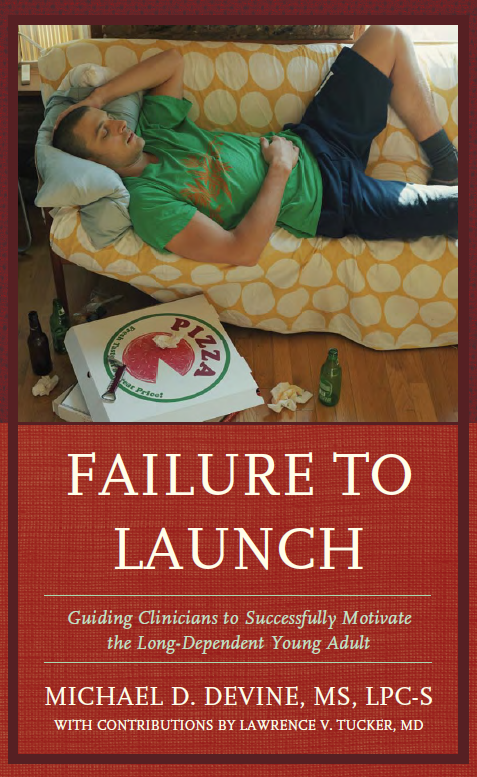
The question is..what can clinicians and parents do to fix this growing problem? The answer is my book “Failure to Launch” ; Published by Jason Aronson (subsidiary of Rowman & Littlefield) and my “Failure to Launch” counseling & coaching program.
My book and program is designed to help explore why this problem is happening, defining the types of failure to launch, neurological basis’, and step by step instructions on how to work with you and your family to get unstuck. For families who are not in the Dublin, Ohio area, I am offering a 2 day intensive workshops for clinicians and parents where we will also be giving away copies of our book to each participant. For more information about my workshops contact my practice at 614-350-2948 or email Michael at: michael@michaeldevinecounseling.com.
 21 Jan 2018
BY: michael
Blog / Uncategorized
Comments: No Comments
Treating the Person Versus Treating A Diagnosis
Every day in my practice I am asked by a client what diagnosis they have or by a parent what the diagnosis is for their family member. What I always tell clients is that while I understand that they would like to hear exactly what is wrong so we can fix it…the truth is that with mental health it’s not always that clear. In an attempt to make mental healthcare more legitimate to the medical field and the insurance companies, we adopted a more model where we have specific diagnoses that have to follow criteria to warrant a diagnosis. Now don’t get me wrong, the DSM (Diagnostic And Statistical Manual For Mental Illness) is a great tool and is on its 5th revision. It really helps clinicians conceptualize a client and help guide us in determining the treatment of some of our clients.
The main issue is that unlike medical problems, many of the mental health problems that people experience can be shades of gray and often there is co-morbidity (multiple diagnoses) that cloud the clinical picture. When doing an intake of a difficult case, I will be given report after report with contradictory diagnoses and the sad truth is that while the parents are asking what the diagnosis is, we are forgetting that we are treating a person….not a diagnosis. We can call it Captain Crunch Disease but the truth is that the way myself and the people in my practice view it…we treat people with symptoms and regardless of what we call it we are going to treat the symptoms specific to that client. Diagnoses often are more for clinicians to conceptualize in our heads but we don’t have to label it and lock ourselves into the label of X or Y and what comes with that diagnosis.
I am the type of clinician who believes that every client who walks into my office has strengths and weaknesses and it is my job to understand the person as a whole and find a treatment approach that works for them and takes into account who they are, what their life is like, and what is important to them. We try to take what they do well and use that as a tool to help overcome the areas that they are having problems in.
There are times when having a diagnosis such as ADHD, Autism Spectrum Disorders, etc. can be liberating for a client to know that they are not “dumb” or “weird” and that there is an understanding of the problem and hope for the future. I tend to pride myself on being an excellent diagnostician and understand everything that goes into developing a clear diagnosis, but let’s not lose sight of the person in the process.
 14 Jan 2018
BY: michael
Blog / Uncategorized
Comments: No Comments
Part 3: I Got Ya! :How mindfulness can help get our mind back under our control
When I first present the concepts of Observe & Describe to my clients, they often ask me how/when to utilize them. The power of mindfulness is a skill that has to be practiced by a person on a consistent basis for it to make a difference in their lives. The power of Participate is perhaps one of the most difficult concepts to master in mindfulness. When trying to be a mindful person, one must fully participate in whatever they are doing. When you are doing home work you only do home work, when you are having a conversation you only have the conversation, etc. You do only one thing at a time and you do it with 100% of your attention. In the modern area of cell phones, text messaging, and computers; people often are doing 3 things at once without even realizing it. Think about how many times you have been talking on the phone to somebody while surfing the internet or driving your car while texting at the same time. We all do it everyday but when we divide our attention and energy to multiple things at once, we often are not being effective in that situation.
Think about a baseball pitcher for a minute. If the pitcher is in mid wind-up and then starts thinking about leaving his iron on at home or starts looking at a pretty girl in the stands…what happens to the quality of his pitch? It surely will not be a strike down the middle. Athletes have been using mindfulness techniques for years to focus more on their game and improve their performance. So why would we assume that we can surf the internet and still have a quality conversation at the same time. Why would we assume that we could text message and still be a safe driver? The answer is that we can’t! The main part of this stage of mindfulness is letting go of distractions and fully participating in what we are doing. When we are in class listening to the professor lecture, we fully participate in the lecture. When our mind drifts away and starts thinking about how we can’t wait for class to end because we are hungry…we go through the steps of mindfulness
Describe
“I am being distracted”
” I just had a thought about wanting class to end so I can eat”
” I am having a physical sensation of my stomach growling and my mouth is watering”
Observe
” I need to bring myself back to the present”
“Look at the teacher and watch the teacher move with eyes”
“Listen to the sound of the teacher’s voice with my ears”
“Feel the touch of my pencil against my hands”
If you follow these steps, then you will identify the distraction and bring yourself back to the present. If you become distracted over and over again, then utilize the same steps and bring yourself back again. It doesn’t matter how many times you are distracted, all that matters is that you bring yourself back to the present again and again.
Even when you are not being distracted, consistently check in with yourself to make sure that you are fully participating in your life. When you are eating, say to yourself “I am eating right now”. If you are doing home work say to yourself ” I am doing homework right now”. This will allow you to make sure you are being present. Remember, practice, practice, practice. Mindfulness is a not the way our brain wants to work and you must be disciplined in your practice.
 14 Jan 2018
BY: michael
Blog / Uncategorized
Comments: No Comments
Part 2: “I Got Ya!”:How mindfulness can help get our mind back under our control
When we are being mindful, it is very important to realize the importance of being able to Describe what is going inside your mind. I liken it to “thinking about your thinking” or simply commentating what you are telling yourself. Every one of us has conversations inside our heads; where we decide what we are going to do next or trying to figure what we just saw. When I ask my clients how often they think about their thinking, I mainly get a blank look back at me with a response of “what do you mean?”
The first step in learning how to describe your thoughts is thinking of yourself like a commentator during a football game. The announcer will see what is happening and will commentate what just happened to the viewer (i.e. Montana drops back to pass). When you are commentating on your thoughts, call a thought a thought, a feeling a feeling, and a physical sensation a physical sensation. For instance, if you suddenly become hungry, you say to yourself ” I just had a thought that I am hungry; I know I am hungry because I also have a physical sensation that my stomach is growling and my mouth is salivating”.
This process accomplishes several things. First, it allows you to start becoming more cognizant and mindful of what is going through your mind. But secondly, it also helps slow down our mental processes. If our thought processes are a shade slower, then we are able to identify what we are think when we feel a particular way as well as identifying our thoughts before we take an action. I always explain to parents of children with ADHD that their children act impulsively because they do not think before they act. the thought processes are happening too quickly; mindfulness helps slow down that process so they begin to have the ability to have forethought or thinking before they act. if a person thinks before they act, then they have the ability to decide whether or not their planned action is a good idea.
Furthermore, many clients do not know why they feel the way they do. When I ask several of my clients why they are sad, they often answer that they have no idea. Mastering the step of Describing will help those clients think more about their thought processes and allow them to become privy to cognitions and thought patterns that they did not pay attention to previously. If a client knows the distressing thoughts that are causing them to feel sad, angry, anxious, etc., then they are able to utilize techniques to change their thinking.
BY: michael
Blog
Comments: No Comments
Could PTSD Be a Significant Cause in Police Shootings?
With the proliferation of cell-phones, live-streaming, dash-cameras, and body cameras, Americans have been inundated with footage of police incidents that often leave people wondering why and how something happened, who was to blame, and what can be done to fix the problem. Just last week, two incidents with police in St. Paul, Mn & Baton Rouge, La were taped/streamed live for the world to see and react upon. Don’t worry, I am not going to waste anymore cyberspace on another article trying to figure out who is more to blame for these incidents, however there is an angle on this topic of discussion that I have yet to hear of anyone deliberating, and I think it is one that is vital for us to consider.
During the many interviews and town hall debates that have been conducted over the past several months, the most poignant being the recent CNN Town Hall Debate, in which we heard both sides explain in brutal honesty the reality of what life is like policing and living in the inner cities of America.
Residents have explained in detail the horrific realities of living in a crime and poverty ridden environment; often describing the pain and fear they must cope with everyday over the possibility of losing a loved one to street crime. Residents described their personal history with the police and about how many young black men and women experience intense fear and anxiety when simply going out for a drive because of the fear that they might get pulled over solely because of the color of their skin. On the flip-side, we have police officers describing the pressure and angst that comes along with being responsible for these very same areas on a daily basis. They explained what it is like to patrol high crime areas where every traffic stop withholds an immense risk of encountering a criminal who is carrying a weapon and has nothing to lose, therefore distinctly increasing the the possibility of getting hurt…or worse.
Furthermore, the deteriorating relationships between police officers and the communities they patrol have added a whole new layer of fear to the equation. The police force knows how angry the citizens are with those among their line of work as a whole and they understand the possibility of those emotions spilling over into much more contemptuous interactions. In the same CNN Town Hall Debate, current and retired officers also described the difficulty of being forced to wear multiple hats within these communities. They expressed feelings and opinions of which expressed their belief that they are being asked and expected to do too much and yet provided little to no resources or training to handle it all. It was only last week that an article was published reporting that 49 Dallas police officers have quit due to many of these exact issues. One has to ask ourselves, what kinds of cumulative effects do all of these circumstances have on the police officers and the citizens in their communities? What effect does long-term and chronic stress, fear, anxiety, crime, and trauma have on the human brain and personality as a whole?
The human brain has the ability to adapt to its environment to ensure its survival, this concept is called plasticity. As we have seen in many soldiers, when the brain is exposed to long-term and chronic life-threatening stressor/s it begins to believe that this is how it is going to be forever, instead of continually relying on plasticity to recover. As a result, the brain decides to permanently change and adapt itself in order to equip the person with the capability to react to their environment in ways that will improve their probability of survival. A few of the changes might include, becoming more vigilant, reacting faster, less control of anger, improved attention and focus, etc. Because the brain has changed and adapted itself to these particular setting characteristics, once the person leaves this type of environment the brain is still operating under the impression that nothing has changed, which unfortunately causes all of the problems that we see when soldiers leave the battlefield and return  home. They struggle with anxiety, are quickly angered, hypervigilant, easily startled, insomnia, etc, and often are forced to turn to drugs and alcohol to cope.
Do any of these sound familiar? Do we not hear the same exact things from police officers and citizens living in these communities? Think about that for a second… What downstream problems would that create of people within a community? How many times have we asked ourselves why the police officer was so quick to become agitated and use force? How many times have we asked why the citizen who was pulled over was so quick to become angry and confrontational? How many times have we asked why the officer shot somebody or why they used so much force to stop somebody who was not armed? How many times have we asked why the citizen who was shot didn’t just stop running or chose to make a particularly quick movement?
It is easy to just say that the officer was racist or the citizen was a criminal and “had it comingâ€. That seems to be the debate that we see playing out in the news currently anyways. And although there are cases where such claims might hold true, if we take the time to look at these incidents through the lens of each party whom are both living/working in a high crime and poverty stricken area, we might find that some of these victims/suspects are struggling with symptoms of PTSD. With considering this it is possible that we will have a different explanation for why these similar incidents are continually happening and perhaps even a new approach to dealing with them.
Of course there are a multitude of factors that work into the controversies among police and the communities, however what I am suggesting is that we consider a new perspective when discussing and dealing with this growing issue. It is important to explore this hypothesis because if these possibilities hold true then all the police training and socio-economic fixes we’re debating may never stand a chance of working if in fact the brains of the parties involved have changed and are the main cause of all the misperceptions, reactions, and emotions that perpetuate these types of incidents. We owe it to our police officers and citizens to figure this out and get them the help that they need,because our country cannot withstand much more of this perpetual violence among our very own citizens.
BY: michael
Blog / Uncategorized
Comments: 1 Comment
Time to Change The Conversation: What We Should Be Learning From Celebrity Deaths
I have no doubt that at this very moment I am one of many professionals who are racing to write an article or have a comment ready to address the sudden suicide of actor/comedian Robin Williams. There will be the typical theories from the likes of Dr. Drew who will discuss the role of addiction and mental illness. The local news will invite experts on the air to discuss what we missed and how families can look for the underlying signs of depression.
Do not get me wrong, these are all very valid points to discuss, but they have been said after every celebrity death and the same assessments are reported every news cycle.I was listening to the coverage on my way home and on cue hear Dr. Drew saying what I thought he would say. But it was a quote from a fellow actor that got my attention the most. Former SNL alum “ “ said that she will remember Robin Williams, not from his death, but for his energy that he brought to acting and comedy. The words that stood out to me about this memory was that, while it is a very sweet comment that expresses the respect that she had for Robin Williams, the clinician in me said, “maybe we shouldn’t forget why he died and how he died.â€
Now before you get the wrong opinion, hear me out for a second. Every day in my office I see adolescents and young adults discuss how the American Dream is to get rich, famous and have nice houses and cars. They believe that is the American Dream and believe that those luxuries will cure all of their problems, will bring them happiness and purpose in life. The truth is that these clients are empty inside and have fallen for the false idea of what brings happiness and meaning. We can blame parents but really this mindset permeates television, movies, Internet, and society itself. The entertainment industry especially is an offender with reality television stars who flaunt wealth (wealth often gained from who their parents were and not what they did). It’s no wonder why the population believes that this is the American Dream and the purpose of life. But one by one the very figures who flaunt this message turn out to not see the payout from their own message.
Robin Williams may not have been a pusher of this false mindset, but his death does provide us an opportunity to explore why our culture yields so many people who have everything that the American Dream tells them they need only to find that it was not the answer. The irony is Robin Williams was a man who tried to do everything right. He was one of the first actors to be open about his addiction issues early in his career. He even went to rehab last month to address resurfacing issues in his addiction before he relapsed again. This is a man who had it all and yet everything that we think he needed was not enough to keep him alive. We are obviously missing something as professionals when somebody can do everything right to deal with their problems, have everything we are taught to need to be happy, but the results are another wasted talent and life. We keep losing people close to us and continuing the same dialogue and advice has yielded no positive results. If we apply these solutions to running a business, it would be the equivalent to choosing the same ad campaign that results in you losing sales; after a while you would realize that if you want to stay in business you need to figure out a new way to get business.
The answer is to not restate it as simply depression, addiction, or missing the warning signs. Maybe the problem is all around us, and these problems are merely the collateral damage of the society that we created. We can use this opportunity to forget how this amazing talent died and ask the same question. Or we can look at how we live our lives and realize that maybe the problem is not how we cope with society, but rather, how society is constructed in the first place. Maybe we need to start asking the question of why the people who have it all, feel so empty on the inside, they kill themselves slowly with drugs or suddenly with a gun. How does this play out not only on the streets of Hollywood Blvd, but also Main St. America?
BY: michael
Blog
Comments: No Comments
What Is Really Going On With This “Knock-Out Game”?
It seems like everyday we are reading an article or watching a feature on the local news about somebody being attacked randomly on the news. In my own city of Dallas, two elderly men have been attacked in the last two weeks as they were walking out of a restaurant. In each case, they were attacked by three men and were beaten severely enough to be hospitalized and in each case nothing was taken from them. The news suspects they are victims of the “knock-out” game and add to an already growing list of suspected “knock-out game” attacks throughout this country and in Europe. So why is this happening? Initially news outlets and police investigators suspected race or religious motivations for the attacks, but as more incidents of the game have increased, the demographics of the individuals have become much more diverse. If there is no specific motivation such as hatred towards a group of people, then we have to start realizing that the motivations for these attacks is much more sinister and depressing.
One of the overarching concerns that I hear from people in my practice is how worried they are about the future of society and how powerless they feel to change anything. Many people’s fears are fed by what they read and see in the media; whether it be a powerful shadow government trying to enslave its citizens or the rich elite who rig the rules to grow their wealth while steeping on the little people on the way. Regardless of what side of the political spectrum/ideology people fall on, the thing that is crystal clear is that people are unhappy and feel the system is rigged against them and there is nothing they can do to change it.
Sigmund Freud would argue that when you have a situation when you have a large group of people who are angry, desperate, and powerless and that emotion has to go somewhere. If it is perceived that nothing can be done about it, then we displace that emotion onto something else to balance the equation of sorts. I believe that these “knock-out game” attacks are simply groups of people feeling helpless, angry, and morosely narcissistic, displacing that intense anger on something they can. It really makes sense if you think about it.
How many of us have gotten angry and punched a wall or thrown a phone in anger? The wall or the phone didn’t make us angry, but the wall won’t do anything if we hit it. How many of us got reamed at work by a boss and picked a fight with a spouse or have been short with your family members as a result? We all do it and I think we are seeing a growing trend of anger at the direction of society with the sense that we are passengers along for the ride with nothing to do about it. The emotions are so intense that even drugs, alcohol, or other distractions can’t suppress them anymore. The emotion has to go somewhere and a deviant and obviously desperate swath of our population has taken to extreme and sociopathic measures to deal with it. That is just my professional opinion. What do you guys think?
- 1
- 2